Case studyR&D · User testing · IxP
CityScape
A tactile & auditory game for visually impaired children
- Client
- M.D.D Program
- Collaboration
- muZIEum
- Duration
- 3 weeks
- Role
- Research, concept, prototyping, user testing
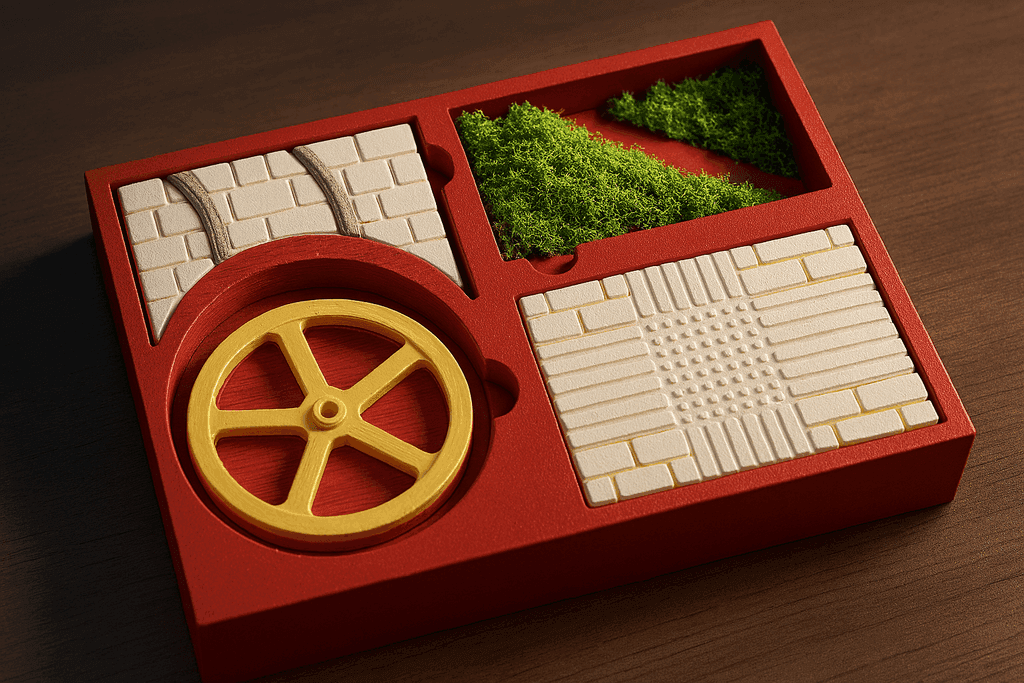
SummaryCityScape is an interactive learning game for visually impaired children aged 4 to 6. It combines tactile exploration with sound, giving children a playful and safe way to learn about spatial awareness, navigation and the elements of a city.
01CityScape
The question
How can young children explore the complex environments of a city when they cannot rely on sight?
Traditional games and learning tools rely heavily on visuals, leaving children with visual impairments at a disadvantage. We wanted to design something that lets them explore the city through touch and sound, while teaching spatial awareness and navigation skills.
My role stretched across research, concept development, prototyping, user testing and team collaboration, balancing technical feasibility with a child-friendly design from first idea to final prototype.
02CityScape
Three challenges
- 01
Access
Limited access to interactive learning tools that are inclusive.
- 02
Safety
A lack of safe, playful ways to learn about city elements: roads, crossings, buildings, transport.
- 03
Fun
Existing solutions focused more on education than on fun and engagement.
03CityScape
Smarter play
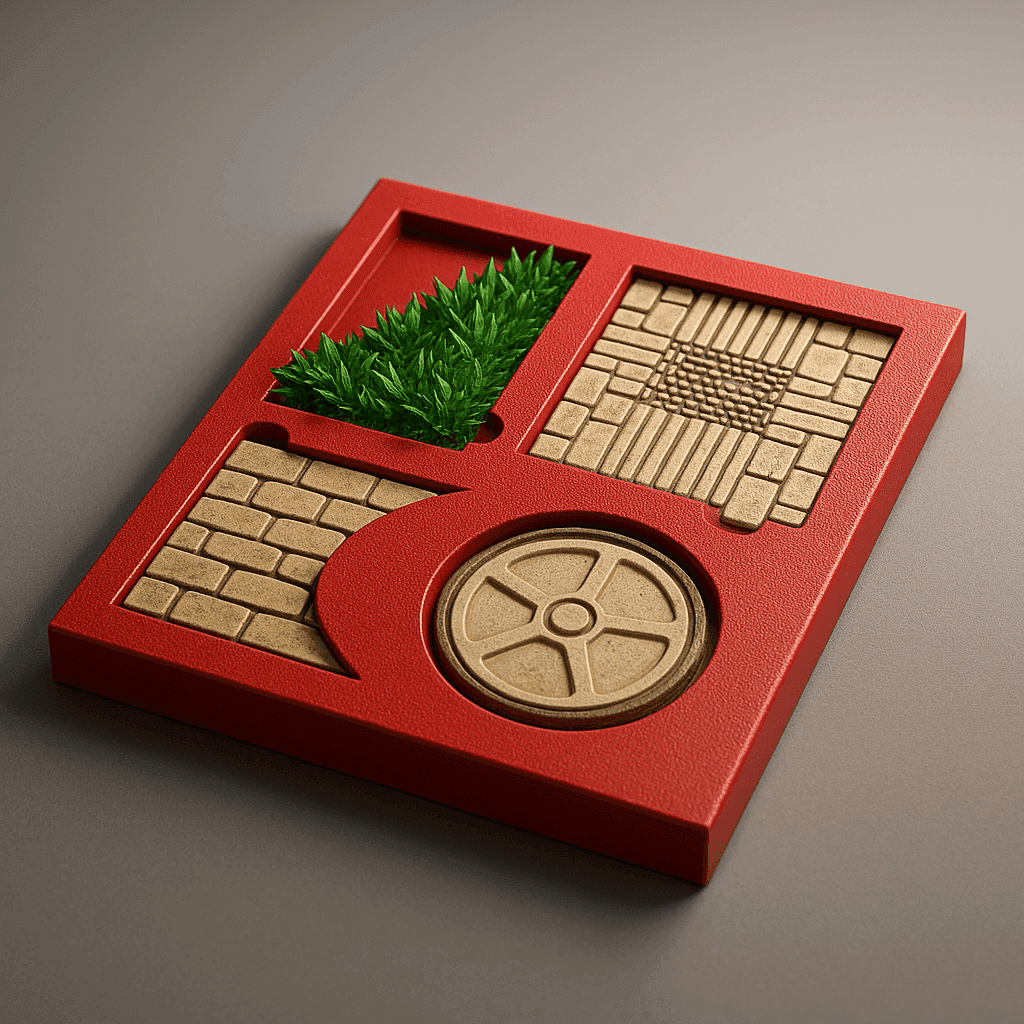
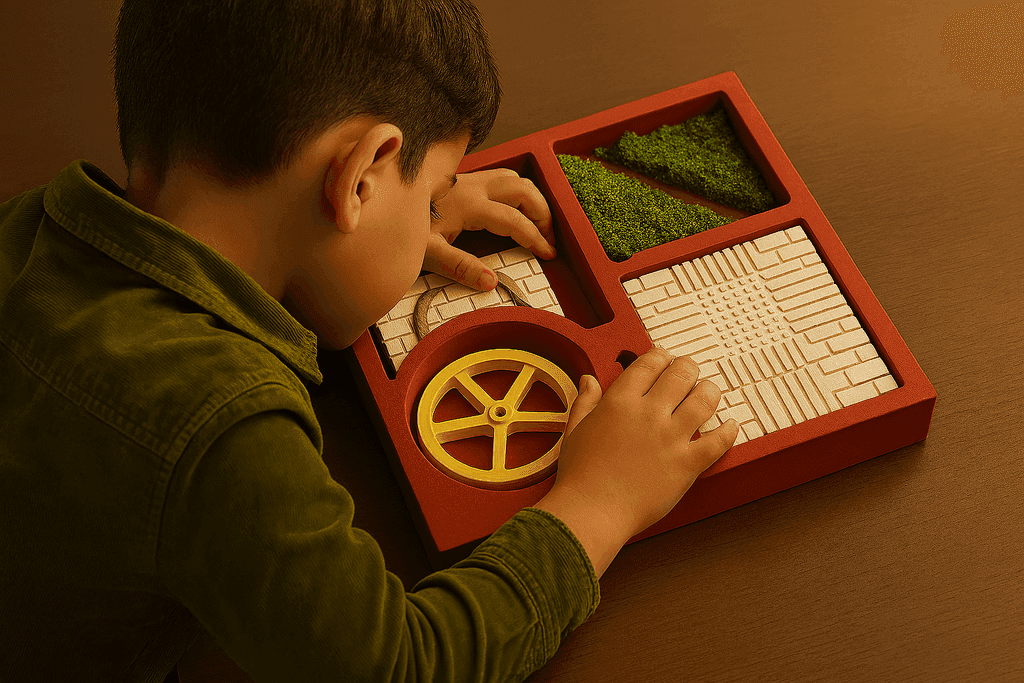
CityScape is an interactive board game that blends tactile exploration with audio feedback. Children navigate a miniature city by touch, and the game answers with sound cues that mimic the real world: the beep of a crossing signal, the hum of traffic, footsteps on a sidewalk.
- 01
Tactile board
Raised surfaces and textures represent roads, buildings and pathways.
- 02
Audio cues
Each urban element is paired with a sound: bike bells, tram bells, crossing beeps.
- 03
Missions
Guided challenges like “find the park” or “cross the road safely.”
04CityScape
Research & insights
We spoke with parents, educators and accessibility experts. A few insights shaped every decision, from materials to audio design:
- 01
Multi-sensory
Children engage best when touch and sound combine; information sticks.
- 02
Confidence
Small wins matter: users need encouragement to keep exploring.
- 03
Inclusion
Most educational toys weren’t designed inclusively, making them frustrating or inaccessible.
05CityScape
Prototyping & testing
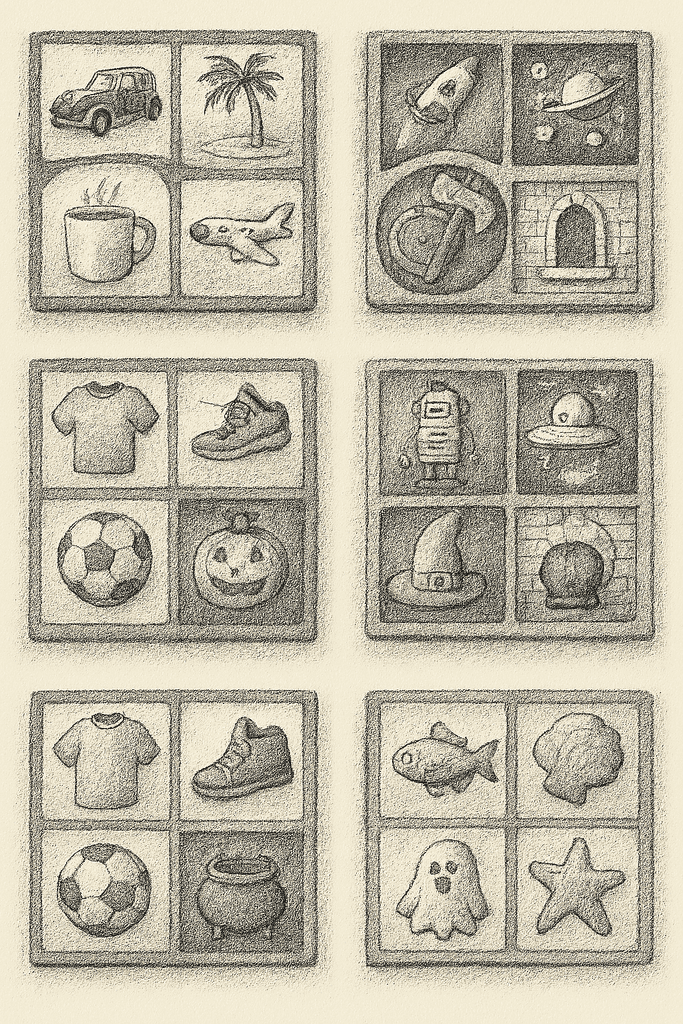
We began with rough sketches, then built low-fidelity tactile boards out of foam and clay to test quickly with children. Later we layered in Arduino-based sound triggers to bring the board alive.
Testing showed how kids naturally approached the board: some traced roads with both hands at once, so we widened the paths. Parents stressed durable materials, because children explored with enthusiasm.
06CityScape
Hard problems
- 01
Learning vs. fun
When it felt like schoolwork, kids lost interest. We reframed tasks as playful missions instead of lessons.
- 02
Affordable audio
We started with a Wizard-of-Oz test, a facilitator triggering sounds by hand, before moving to a semi-automated system.
07CityScape
Impact & next steps
Next: modular boards for different cities, app integration for tracking progress and unlocking challenges, and richer soundscapes.
CityScape taught me how powerful multi-sensory design can be, and how important it is to prototype with real users and balance fun with function. It remains one of the projects I’m proudest of.
- 01
Parents
Children were more confident talking about city spaces after playing.
- 02
Kids
They called it “fun” rather than “learning”: a huge win.
- 03
Educators
Saw potential to scale it into classrooms as an inclusive teaching tool.